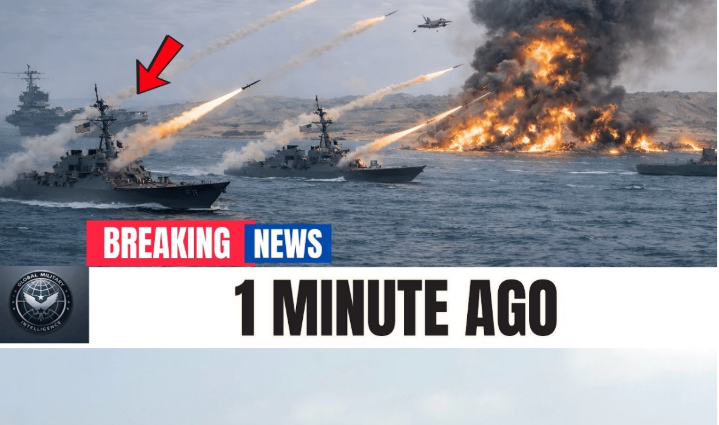
USS Millius Missile Attack Overwhelms Defenses
The USS Millius missile attack began with 36 fast-moving threats detected simultaneously. The barrage included ballistic missiles, cruise missiles, and drone-guided projectiles.
The attack originated from Houthi-controlled territory in western Yemen. The target was the USS Millius, an Arleigh Burke-class guided missile destroyer.
The vessel was escorting a 14-ship commercial and naval group. This operation took place in the southern Red Sea.
Scale of Attack Exceeds Expectations
The USS Millius missile attack followed six hours of elevated launch activity. However, the scale exceeded all projected threat scenarios.
The 36 simultaneous launches marked the largest Houthi salvo since late 2023. Therefore, the objective was to overwhelm the ship’s defenses.
Officials said the attack aimed to saturate the Aegis combat system. It also sought to exhaust interceptor missiles.
The strategy intended to sink a U.S. warship. However, events unfolded differently.
Aegis System Responds to Threat
The USS Millius missile attack triggered immediate defensive action. The ship reached full combat readiness in under 90 seconds.
Its Aegis system tracked all 36 threats simultaneously. Additionally, it prioritized targets based on risk level.
The SPY-1D radar operated near maximum capacity. Meanwhile, electronic warfare systems and weapons remained active.
The first interception occurred about 11 minutes into the attack. SM-2 missiles destroyed an incoming ballistic threat.
Coordinated Defense Beyond a Single Ship
The USS Millius missile attack did not involve one vessel alone. Two additional U.S. naval assets were positioned beyond the horizon.
These assets were not visible to Houthi radar. However, they contributed to the defensive response.
When the attack began, they received targeting data immediately. Therefore, they launched interceptors in coordination.
This combined defense increased total interceptor capacity. It proved critical to countering the large-scale assault.
Close-Range Defense Prevents Impact
The USS Millius missile attack pushed several threats into close range. Reports indicate three to five missiles approached the final defense zone.
The ship’s Phalanx CIWS system engaged these threats. It fired at a rate of 4,500 rounds per minute.
All incoming threats were either intercepted or fell into the sea. The USS Millius sustained no direct hits.
However, a near detonation caused damage to external sensors. Several crew members were also injured.
Rapid U.S. Response Targets Yemen Sites
The USS Millius missile attack triggered a swift U.S. response. Military doctrine treats such attacks as strategic events.
U.S. Central Command authorized strikes on 14 sites. These included launch infrastructure, storage facilities, and radar systems.
Targets were located in the Hudaydah coastal corridor and mountainous regions. Additionally, drone maintenance depots were hit.
The strikes used precision munitions and coordinated timing. This approach prevented evacuation or dispersal.
Impact of Strikes and Military Implications
The USS Millius missile attack response caused significant damage. Satellite imagery showed destruction across most targeted sites.
Secondary explosions indicated stored munitions were hit. Radar and command systems were effectively neutralized.
The engagement lasted 22 minutes from start to finish. In that time, the ship survived the largest attack of its kind.
The response demonstrated rapid decision-making. It also highlighted pre-planned military readiness.
Regional and Strategic Consequences
The USS Millius missile attack has broader regional implications. It demonstrated both the scale of Houthi capabilities and their limits.
The failed attack exposed vulnerabilities in their infrastructure. Additionally, the U.S. response showed intelligence penetration.
Observers noted implications for Iran’s regional strategy. The event raised questions about proxy warfare effectiveness.
For Gulf nations, the incident confirmed both risk and deterrence. It highlighted the importance of missile defense systems.
Outlook After USS Millius Missile Attack
The USS Millius missile attack marks a significant moment in regional conflict. However, it does not signal an end to hostilities.
Officials expect future attempts and continued escalation. Meanwhile, shipping routes remain under pressure.
The incident underscores ongoing risks in the Red Sea. It also highlights the limits of security in active conflict zones.
As tensions persist, further developments remain likely. The situation continues to evolve rapidly.