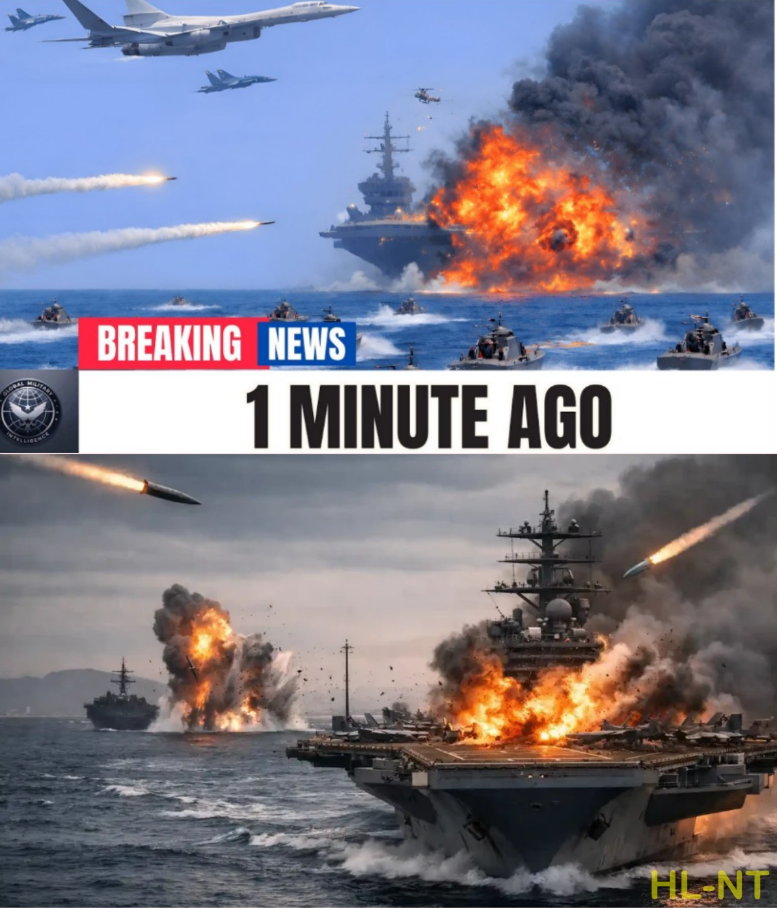
U.S. Navy Faces Russian Tu-160 Bombers and Iranian Swarm in Persian Gulf Standoff
U.S. Navy faces Russian Tu-160 bombers and Iranian fast boats in a tense Persian Gulf encounter. At 14:42 local time, radar aboard the USS Abraham Lincoln detected three high-speed signatures from the northeast. They were Russian Tu-160 strategic bombers, flanked by four Su-35 fighters. The formation flew with Iranian approval, turning a routine patrol into a coordinated show of force.
For nearly four hours, the carrier strike group stayed on high alert. Iranian missile batteries moved into position. Fast attack craft surged toward international waters. No shots were fired. Yet the close-range maneuvering carried real risk. This standoff highlights how major powers test limits in the gray zone between exercise and conflict.
The Initial Detection and Immediate Response
Radar operators aboard the Abraham Lincoln saw the threat clearly. Three Tu-160 Blackjack bombers approached at high speed. These aircraft carry long-range cruise missiles. They flew beyond the range of many ship defenses.
Four Su-35 fighters joined them in tight formation. Intelligence quickly confirmed the flight path crossed Iranian airspace. Signals intercepts showed recent coordination between Russian and Iranian commands. Satellite images revealed activity at coastal bases.
Captain Michael Davidson ordered crisis posture. Rear Admiral Sarah Chen, strike group commander, faced a multi-domain challenge. Russian air assets overhead. Iranian shore-based missiles ready. Fast boats closing from several directions.
Iranian Forces Join the Coordinated Push
Mobile launchers rolled out along the southern coast. These carried modern sea-skimming anti-ship missiles with ranges over 200 kilometers. Analysts assessed more than 40 missiles in firing positions within minutes.
At the same time, 37 Iranian fast attack craft left bases near the Strait of Hormuz. Some were small speedboats. Others mounted heavy weapons or missiles. Iran uses this swarm tactic to overwhelm defenses through numbers and angles of attack.
The combined pressure created a three-dimensional threat picture. Air, surface, and shore elements moved together. The U.S. Navy treated the activity as a serious provocation.
U.S. Countermeasures: Electronic Warfare and Positioning
Admiral Chen ordered two destroyers—USS Porter and USS James E. Williams—to move forward. They formed a barrier between the carrier and the approaching boats.
EA-18G Growler jets launched next. They jammed Iranian radars and created false targets. The electronic battlefield disrupted tracking. This made any missile launch far riskier for Iran.
Overhead, F/A-18F Super Hornets intercepted the Russian formation. Pilots kept safe distance. They documented maneuvers while waiting for orders. The Tu-160s closed to 140 nautical miles—inside cruise missile range—before leveling off.
The Peak Moment: A Single Warning Shot
At 15:23, 32 Iranian craft crossed the outer defensive perimeter. Warnings went unanswered. Fire-control radars locked on.
Admiral Chen chose precise escalation. The USS James E. Williams fired one SM-2 Standard Missile. It detonated in an airburst well ahead of the lead vessel. The bright flash sent a clear message.
Within 90 seconds, Iranian boats began to peel away. They turned back in orderly patterns. The move preserved their claim of a routine exercise.
The Russian bombers adjusted course. They flew parallel to the strike group at 65–85 nautical miles. Tension remained high for nearly an hour.
Strategic Reversal and Orderly Disengagement
During the standoff, Admiral Chen repositioned ships quietly. Destroyers gained better angles on Iranian coastal sites. Fighters shifted to ground-attack loadouts.
The equation flipped. If Iran fired first, U.S. retaliation would come fast.
By 15:31, the Tu-160s climbed and headed north. Iranian radars powered down. Fast boats returned to port. The final vessel crossed back into territorial waters at 16:34.
The entire incident lasted three hours and 52 minutes. No casualties. No direct combat.
Why This Standoff Matters in the Persian Gulf
Russia showed it can project strategic bombers into a U.S.-dominated region. Iran proved it can coordinate air, sea, and shore assets quickly. Both stopped short of open war.
This gray-zone encounter shows how signaling and brinkmanship work today. Missteps can escalate fast. Restraint prevented disaster, but the margin was thin.
From my analysis of similar past events, these moments test resolve without triggering full conflict. They remind everyone that power projection carries real risks.
What Could Happen Next
The Persian Gulf stays volatile. Future patrols may see similar tests. Clear communication between forces helps avoid accidents. Diplomatic channels remain important.
For reliable updates, check U.S. Central Command (centcom.mil) or the U.S. Naval Institute (news.usni.org).
FAQ About the Persian Gulf Standoff
Did any shots hit targets? No. The U.S. fired one warning missile into the air.
How close did the Russian bombers get? They reached 140 nautical miles before leveling off.
Why did Iran back off quickly? The airburst warning showed U.S. readiness. They chose orderly withdrawal.
Was this planned coordination? Intelligence points to yes. Signals and satellite data showed prior planning.
What do you think this encounter signals for U.S.-Russia-Iran relations? Share your thoughts below.