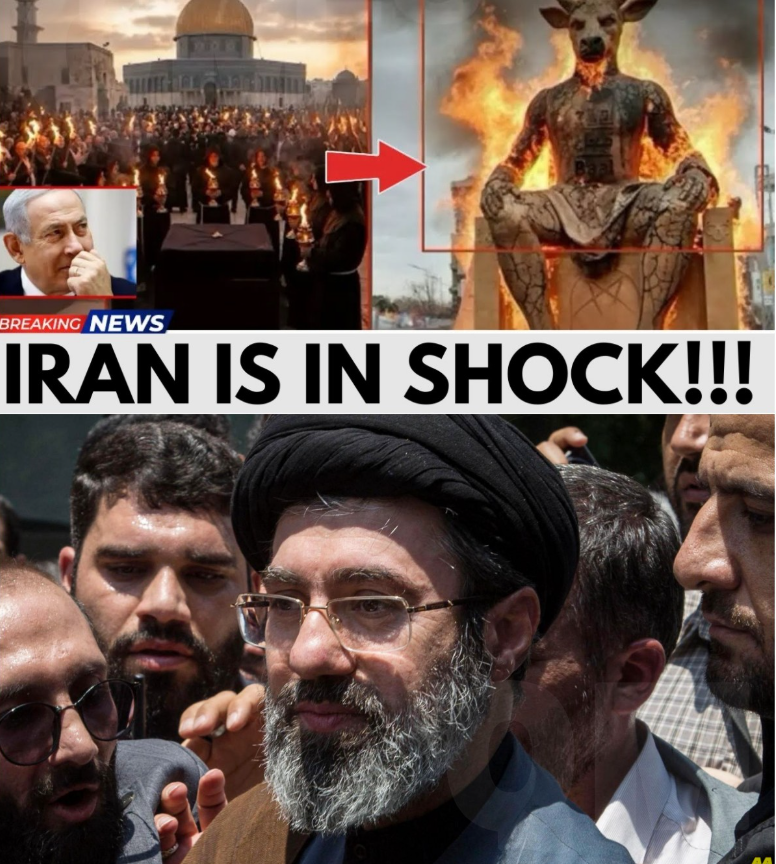
Baal Statue Burned in Iran Draws Global Attention
The Baal statue burned in Iran quickly captured global attention. Observers from religious communities and academic circles began discussing its possible significance.
The statue represented the ancient deity Baal. In biblical literature, Baal symbolizes idolatry and false worship.
The event sparked debate about whether the destruction carried symbolic meaning. Meanwhile, others interpreted it through political or cultural perspectives.
As news spread online, discussions increased across social media platforms. Many commentators questioned whether the act might represent a spiritual statement.
Biblical Meaning Behind Baal Statue Burned in Iran
The Baal statue burned in Iran revived interest in the biblical history of Baal worship. Baal was widely worshiped in ancient cultures, particularly among the Canaanites.
In the Bible, Baal appears as a rival deity to the God of Israel. Prophetic writings often describe the struggle between true worship and idolatry.
One well-known biblical narrative involves Elijah confronting prophets of Baal. The event occurred on Mount Carmel in a dramatic challenge between faith traditions.
According to the story, fire descended from heaven to consume Elijah’s sacrifice. The moment became a powerful symbol of divine authority.
Historical Context of Persia and Biblical Prophecy
The Baal statue burned in Iran also raised discussion about the region’s biblical history. Modern Iran was known in ancient times as Persia.
Persia appears frequently in biblical texts. Several prophetic writings mention the empire and its influence on world events.
The Book of Daniel describes the rise and fall of empires. In that narrative, Persia plays a major role in the unfolding historical timeline.
Meanwhile, the prophet Ezekiel references Persia in passages about future global conflicts. These references have led many readers to examine modern events carefully.
Another important figure connected to Persia is Cyrus the Great. He is remembered for allowing the Jewish people to return to Jerusalem after exile.
Reactions After Baal Statue Burned in Iran
The Baal statue burned in Iran generated varied reactions worldwide. Some observers described the act as symbolic opposition to idolatry.
Others viewed the incident within Iran’s political and cultural environment. These perspectives focused on internal tensions and social divisions.
Religious commentators encouraged reflection on modern forms of idolatry. They noted that idolatry can appear through materialism or secular priorities.
Meanwhile, online conversations continued to grow. Social media users shared opinions, prayers, and interpretations of the event.
Reflection Following Baal Statue Burned in Iran
For many believers, the Baal statue burned in Iran serves as a moment for spiritual reflection. Religious leaders encouraged prayer for Iran and its people.
The Bible frequently calls believers to pray for nations. Supporters emphasized compassion and understanding during uncertain times.
Additionally, commentators noted the importance of examining personal faith commitments. The event reminded many observers of the biblical warnings against false worship.
As discussions continue, the event remains open to interpretation. Some see historical symbolism, while others view it through cultural or political analysis.