US Iran Israel Conflict Begins With Major Military Strikes
The US Iran Israel conflict escalated in late February 2026. The United States and Israel launched a large-scale campaign targeting strategic locations in Iran.
Officials described the operations as precise strikes on military infrastructure. They also targeted command networks linked to Iran’s security apparatus.
During the opening phase on February 28, reports emerged from Iranian state media. These reports said Ayatollah Ali Khamenei had been killed during the attacks.
The reported death of Iran’s Supreme Leader shocked the region. Khamenei had shaped Iran’s political and military direction for decades.
Regional Tensions Rise During US Iran Israel Conflict
Following the strikes, Iranian officials declared a national mourning period. They also warned of retaliation against American and allied targets.
Soon after, Iran launched missile and drone attacks across the region. Some strikes targeted facilities believed to host American or allied military personnel.
Countries including Israel, Bahrain, Kuwait, Qatar, Jordan, and the United Arab Emirates increased security readiness.
Governments activated emergency coordination and defensive measures. Regional defense systems prepared for additional attacks.
Drone Strike in Kuwait During US Iran Israel Conflict
One of the most tragic incidents occurred on March 1, 2026. An Iranian one-way drone struck a tactical operations center near Port Shuaiba in Kuwait.
The facility supported American military logistics for the wider campaign. It was located near the larger Camp Arifjan base.
Military officials said the building had been repurposed as a temporary command center. However, the drone evaded defenses and hit the structure directly.
The attack killed six United States Army service members stationed inside. The strike also caused significant damage to the operations center.
Fallen Soldiers Identified After Kuwait Attack
The soldiers killed were Major Jeffrey R. O’Brien and Captain Cody A. Khork. Also among the victims were Chief Warrant Officer 3 Robert M. Marzan and Sergeant First Class Nicole M. Amor.
Sergeant First Class Noah L. Tietjens and Sergeant Declan J. Coady also died in the attack. All were assigned to a logistics support unit linked to the U.S. Army Reserve’s 103rd Sustainment Command.
Additionally, dozens of service members were wounded. Injuries included burns, shrapnel wounds, and traumatic brain injuries.
Many wounded personnel were transported to hospitals in Germany, Washington, D.C., and Texas. Some required urgent evacuation due to serious injuries.
Dignified Transfer Honors Fallen Service Members
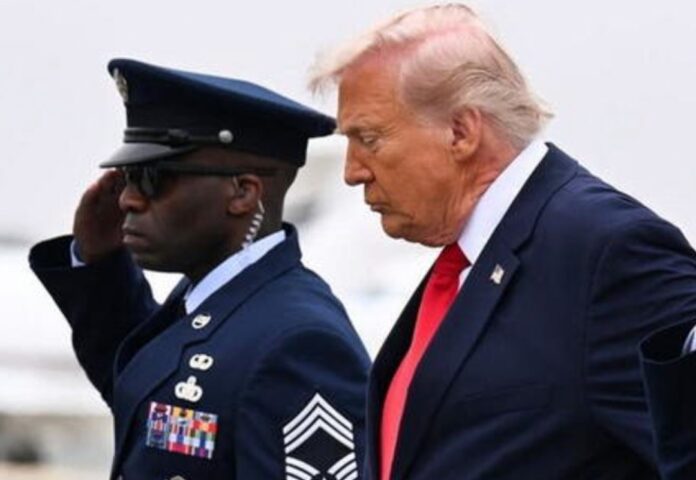
On March 7, the remains of the six soldiers returned to the United States. The transfer occurred at Dover Air Force Base in Delaware.
The dignified transfer ceremony honored the fallen with full military tradition. Flag-draped caskets were carefully carried from the aircraft.
Donald Trump attended the ceremony and met privately with the families. He later spoke with journalists about the conversations.
Trump described the families as courageous and devoted to the memory of their loved ones. He also acknowledged the sacrifices made by military families.
Continuing Operations in the US Iran Israel Conflict
During the same period, the Pentagon confirmed a seventh casualty. Benjamin N. Pennington, a 26-year-old Army sergeant, died after injuries from an Iranian attack in Saudi Arabia.
Meanwhile, U.S. and Israeli forces continued targeted air operations. These strikes focused on missile launch systems and drone production facilities.
President Trump later said the campaign weakened Iran’s naval, communication, and air capabilities. However, intelligence officials cautioned that Iran’s government and military forces remained intact.
Analysts said Iran still retains significant resources and regional influence. Therefore, policymakers continue evaluating possible next steps.