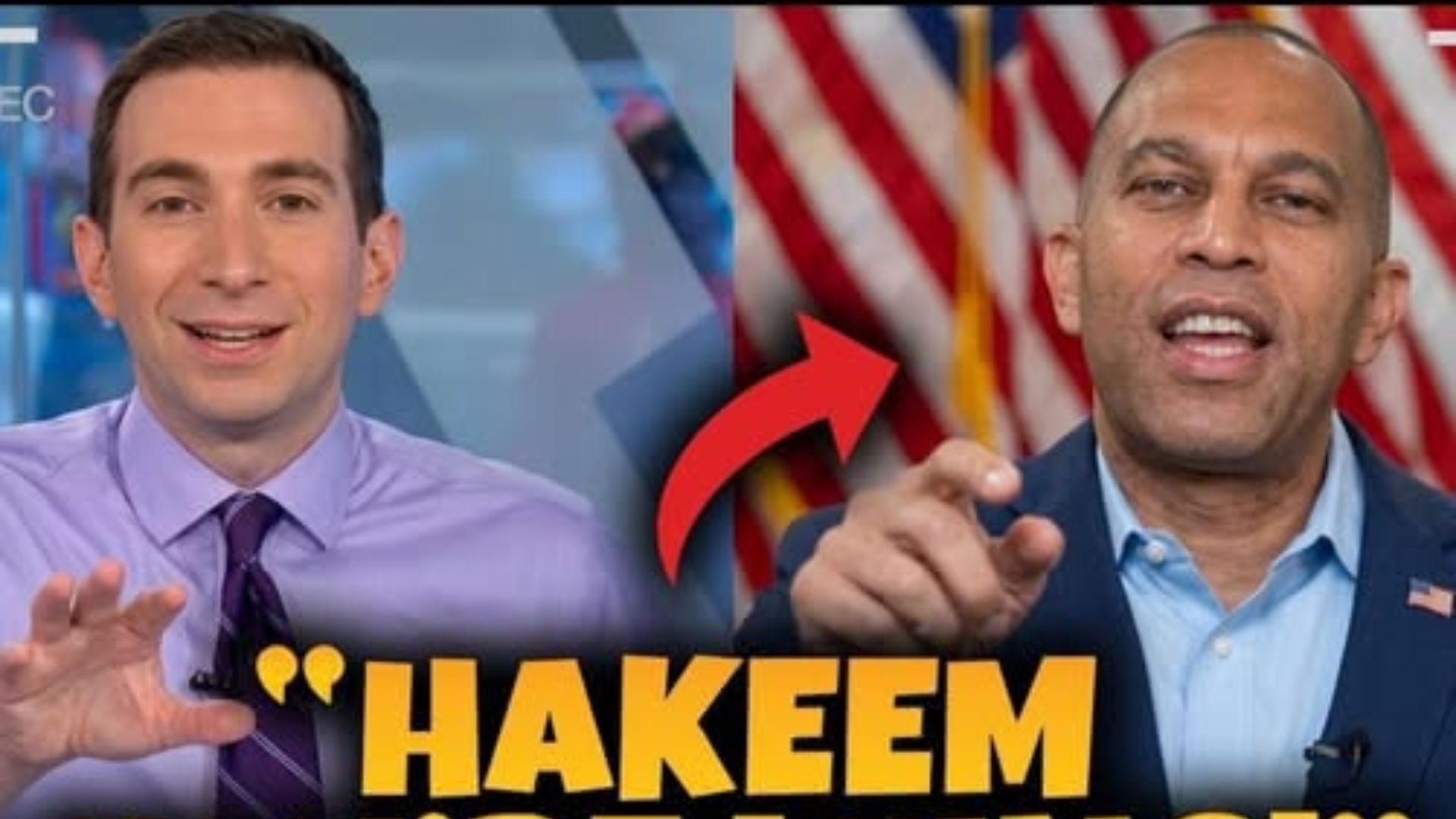
House Minority Leader Hakeem Jeffries is facing mounting scrutiny after newly revealed comments and a leaked private discussion fueled accusations that national Democrats are escalating efforts to reshape courts following a devastating redistricting defeat in Virginia.
The controversy erupted after Jeffries publicly declared that Democrats should consider sweeping judicial “reform” efforts if the party regains power, saying “everything should be on the table” at both the federal and state levels.
“We’re going to have to explore judicial ‘reform’ state by state and at the federal level,” Jeffries said in remarks that quickly ignited backlash from Republicans and conservative legal analysts. “Everything should be on the table as far as I’m concerned.”
The comments came just days after the Supreme Court of Virginia struck down Virginia Democrats’ aggressive congressional redistricting plan in a narrow 4-3 ruling.
The ruling wiped out a strategy that Democratic operatives had hoped would produce as many as 10 Democratic congressional seats out of Virginia’s 11 districts.
That ruling triggered an internal Democratic blame war and, according to a leaked private discussion first reported by The New York Times, sparked conversations among top Democrats about extraordinary measures to potentially sideline or replace members of the Virginia Supreme Court.
According to the report, Jeffries participated in a private call Saturday with Virginia Democratic lawmakers and members of Congress following the court defeat.
Participants reportedly discussed “an unusual gambit to replace the entire state Supreme Court” in hopes of eventually restoring the invalidated congressional map.
The proposal reportedly involved lowering the mandatory retirement age for Virginia Supreme Court justices from 75 to as low as 54, which could immediately force multiple justices off the bench and allow the Democrat-controlled General Assembly to appoint replacements more favorable to the party’s redistricting goals.
The Times report noted that some Democrats on the call supported the idea while others warned it could go too far politically and legally.
Former Democratic Congressman James Moran reportedly described the proposal as “a bridge too far,” warning that Democrats risk losing legitimacy if they pursue court restructuring solely for political advantage.
Still, several Democrats appeared openly willing to consider extraordinary action.
Rep. Suhas Subramanyam reportedly said Democrats must have “a strong stomach right now,” arguing Republicans in other states had already aggressively used redistricting and judicial power to their advantage.
Jeffries himself reportedly told participants he was “exploring how to unravel this decision” and described the court ruling as an unprecedented overturning of “an actual election” by “unelected judges.”
Republicans immediately seized on the revelations, arguing the discussions amounted to an attempt to intimidate or politically purge judges who ruled against Democratic interests.
Critics also pointed to the broader context surrounding the Virginia redistricting battle.
Democrats had invested enormous political capital and tens of millions of dollars into the effort, only to see the maps invalidated after the state high court found constitutional problems with the process.
Virginia Republicans had repeatedly warned that the strategy faced serious legal vulnerabilities, including concerns about the timing and legality of the referendum process used to authorize the new maps.
Now, the court defeat has left Democrats scrambling while also intensifying a larger national debate over judicial power, redistricting, and partisan court reform.
Jeffries’ latest comments are also likely to fuel renewed Republican attacks over Democratic support for expanding or restructuring courts.
Progressive activists and some Democratic lawmakers have increasingly floated proposals in recent years to expand the U.S. Supreme Court, impose judicial term limits, or restructure state courts they view as ideologically hostile.
Conservatives argue the Virginia controversy shows those efforts are no longer theoretical.
The leaked discussion also raised questions about whether any formal investigations could emerge into the coordination between the national Democratic leadership and Virginia lawmakers following the court ruling.
At this point, however, there is no indication of any federal investigation involving Jeffries or the private discussions.
Much of the debate remains political rather than criminal, though Republicans argue the conversations expose a growing willingness among Democratic leaders to challenge institutional norms when court rulings do not go their way.
This article may contain commentary which reflects the author’s opinion.