South China Sea Naval Confrontation Begins During Escort Mission
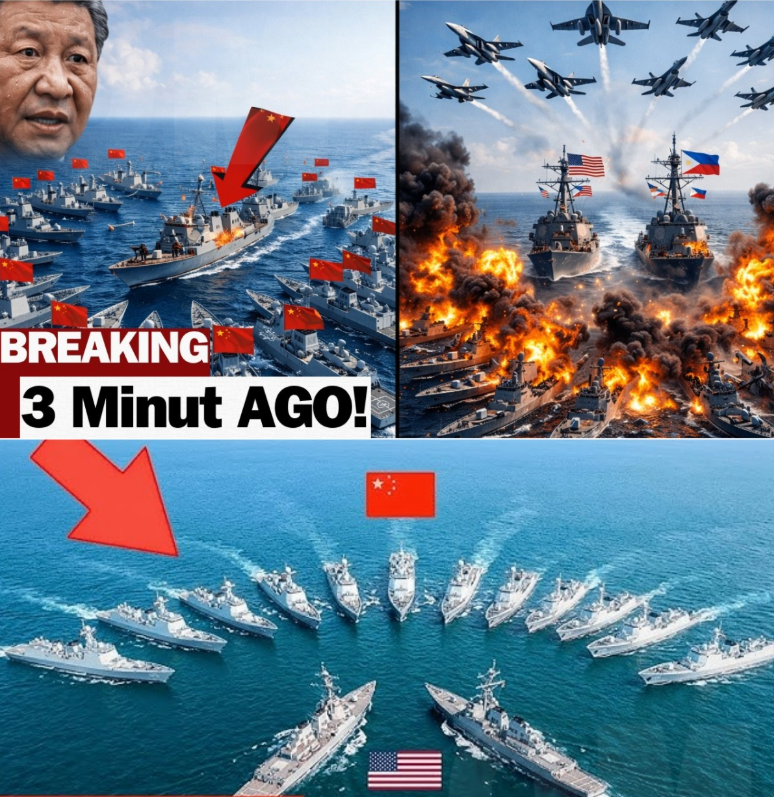
The South China Sea naval confrontation began when two U.S. Navy destroyers escorted Philippine supply ships. The operation involved the USS Chafee and USS Gridley.
The vessels were accompanying supply ships transporting 400 U.S. Marines. The mission aimed to reinforce U.S. commitments to the Philippines amid ongoing regional disputes.
Meanwhile, the operation occurred in the contested waters of the South China Sea. Territorial disagreements between China and neighboring countries have fueled tensions in the region.
The escort mission initially appeared routine. However, the situation soon escalated dramatically.
Chinese Warships Encircle U.S. Destroyers
The South China Sea naval confrontation intensified when Chinese naval forces deployed multiple vessels. Eighteen Chinese ships reportedly surrounded the American destroyers.
The formation included Type 052D destroyers, frigates, corvettes, and coast guard cutters. Analysts described the maneuver as one of the most aggressive actions in recent years.
The Chinese fleet was commanded by Admiral Liu. He reportedly issued an ultimatum to the U.S. ships during the standoff.
According to reports, the message demanded that the American vessels withdraw within 30 minutes. Otherwise, the fleet warned that consequences would follow.
U.S. Navy Response to the Ultimatum
The South China Sea naval confrontation placed American commanders under intense pressure. Captain Rivera, commanding the USS Chafee, faced a critical decision.
According to accounts of the exchange, Rivera refused the demand to withdraw. He reportedly responded that the U.S. Navy would not retreat.
The statement reflected broader U.S. policy regarding international waters. American officials have repeatedly emphasized the importance of freedom of navigation.
Meanwhile, observers worldwide monitored the tense standoff. Military analysts watched closely as the 30-minute deadline approached.
Countdown Raises Global Tension
The South China Sea naval confrontation soon became a global focus. The 30-minute countdown intensified anxiety among military observers.
Both fleets remained positioned in the contested waters. Meanwhile, analysts debated whether either side would back down.
As the deadline approached, tensions increased sharply. Many feared that a military clash could erupt.
However, the situation shifted dramatically as the countdown reached its final moments. The confrontation escalated instead of easing.
Engagement Reportedly Follows Ultimatum
The South China Sea naval confrontation then entered a new phase. Reports described a rapid engagement involving the U.S. destroyers.
According to accounts of the incident, the USS Chafee and USS Gridley executed coordinated tactical maneuvers. The response highlighted the advanced capabilities of the American fleet.
Within minutes, fighting reportedly erupted in the surrounding waters. The confrontation unfolded quickly in the highly contested region.
Analysts later examined the strategies used by both sides. The encounter quickly became a major topic in defense discussions.
International Reaction and Strategic Implications
The South China Sea naval confrontation sparked reactions across the international community. Governments and military analysts responded with concern and debate.
Some observers praised the U.S. response as a strong stance against aggression. Others warned that such confrontations could increase instability in the region.
The South China Sea has long been a geopolitical flashpoint. Competing territorial claims and expanding military activity have intensified tensions.
As a result, the February 3 incident drew widespread attention. Experts continue to analyze its implications for regional security.