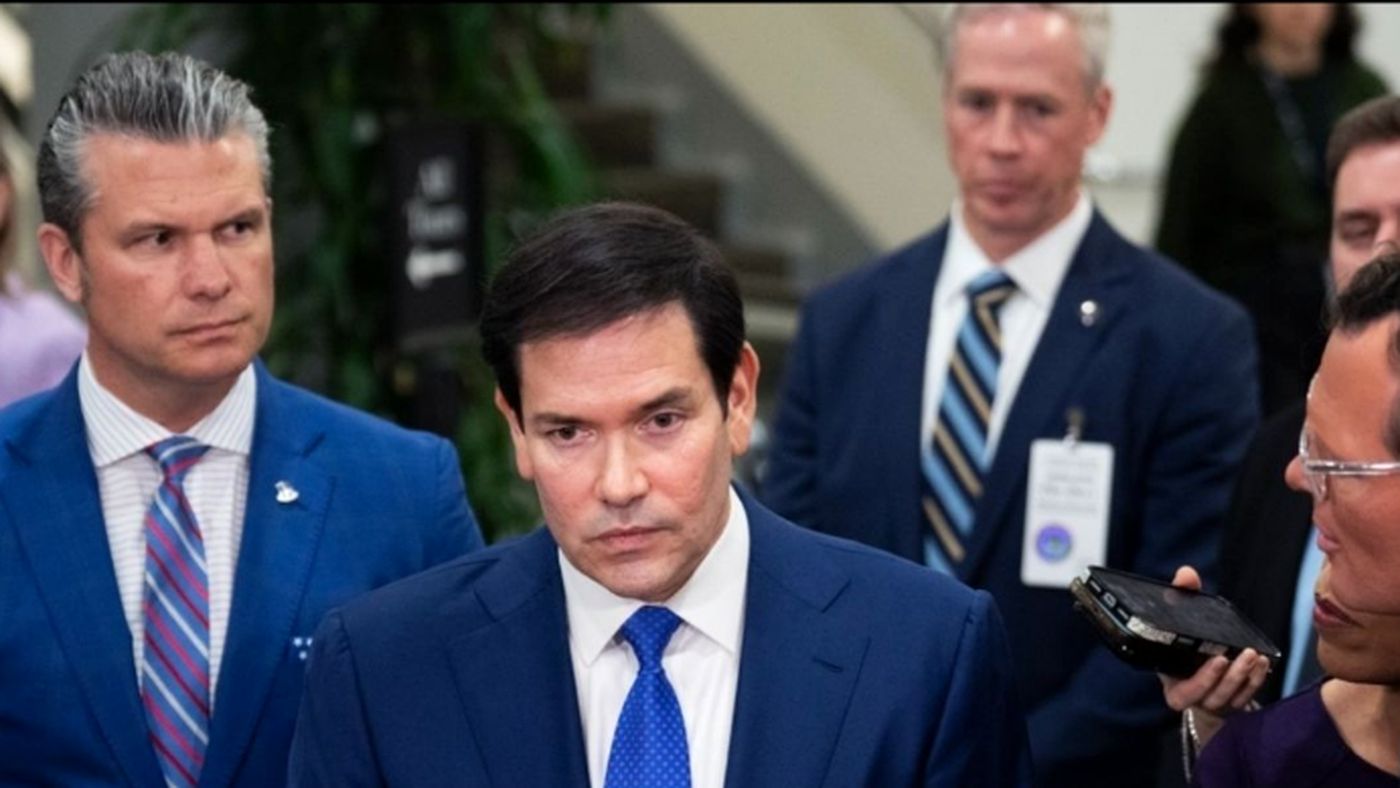
Secretary of State Marco Rubio has imposed new sanctions on a senior Nicaraguan official, marking an escalation in the Trump administration’s pressure campaign across Latin America. The move signals that Nicaragua is no longer a secondary concern but part of a broader U.S. strategy targeting leftist governments in the region.
Secretary of State Marco Rubio has imposed new sanctions on a senior Nicaraguan official, marking an escalation in the Trump administration’s pressure campaign across Latin America. The move signals that Nicaragua is no longer a secondary concern but part of a broader U.S. strategy targeting leftist governments in the region.
“Nearly eight years ago, the Rosario Murillo and Daniel Ortega dictatorship unleashed
On April 18, Rubio designated Vice Minister of the Interior Luis Roberto Cañas Novoa under Section 7031(c), a State Department authority used to penalize foreign officials accused of serious human rights violations. The sanction bars him from entering the United States and was timed to coincide with the anniversary of Nicaragua’s April 2018 protests,” The International Business Times reported.
“Nearly eight years ago, the Rosario Murillo and Daniel Ortega dictatorship unleashed a brutal wave of repression against Nicaraguans,” the State Department said in a statement. The protests left more than 325 people dead, according to U.S. figures.
The latest action follows a series of recent moves targeting Nicaragua’s leadership and economic networks. Just days earlier, the U.S. Treasury Department imposed sanctions on multiple individuals and entities tied to the country’s gold sector.
In the years since, Nicaragua has undergone a significant political shift. Opposition
U.S. officials said those networks played a role in sustaining the government’s finances while it tightened its grip on power. The sanctions were aimed at disrupting those revenue streams and increasing economic pressure on Managua.
Together, the measures reflect a coordinated effort to apply both political and financial pressure. Officials say the goal is to reinforce that human rights abuses will continue to carry consequences under U.S. policy.
Rubio has taken an increasingly visible role in shaping the administration’s approach to Latin America. His strategy links Nicaragua to broader efforts already underway against Venezuela and Cuba, according to administration officials.
That framing places Nicaragua alongside governments viewed by Washington as resistant to U.S. influence. Analysts say the administration is working to establish a more consistent framework for dealing with those countries.
🇺🇸🇳🇮 Rubio sanctioned Nicaragua's Vice Minister of the Interior for human rights abuses.
The Ortega-Murillo regime keeps getting squeezed. One more official added to the list.
The Trump administration isn't letting up on Nicaragua. https://t.co/WbRWUknAS6 pic.twitter.com/hP5PmKWeFT
— Mario Nawfal (@MarioNawfal) April 18, 2026
The April 2018 protests that triggered the latest sanction began over proposed social security reforms. They quickly expanded into a nationwide movement against Ortega’s rule as public frustration intensified.
The government’s response was swift and forceful. Security forces and allied groups cracked down on demonstrators, leading to hundreds of deaths, thousands of injuries and widespread detentions.
In the years since, Nicaragua has undergone a significant political shift. Opposition figures have been jailed or forced into exile, while independent media outlets have been shut down.
The Trump Administration continues to hold the Murillo-Ortega dictatorship accountable for brutal human rights violations against Nicaraguans. I’m designating Nicaraguan Vice Minister of the Interior Luis Roberto Cañas Novoa for his role in human rights violations.
— Secretary Marco Rubio (@SecRubio) April 18, 2026
Civil society organizations have also faced increasing restrictions. Universities, religious groups and other institutions have come under growing pressure from the government.
International organizations and U.S. officials have repeatedly described the situation as a sustained campaign of repression. They say conditions in the country continue to deteriorate as political space narrows.
The sanction against Cañas Novoa is relatively limited in scope, focusing on visa restrictions rather than broader economic penalties. Still, officials say the timing and symbolism of the move are significant.
By linking the action to the anniversary of the protests, the administration is reinforcing its message of accountability. It also keeps international attention focused on Nicaragua’s human rights record.
More broadly, the decision underscores that Nicaragua is now fully integrated into a wider U.S. regional strategy. As pressure continues on Venezuela and discussions around Cuba intensify, officials indicate the approach is becoming more unified.
For Nicaragua’s leadership, the message is clear. Washington is continuing to increase pressure as it expands its efforts across the region.