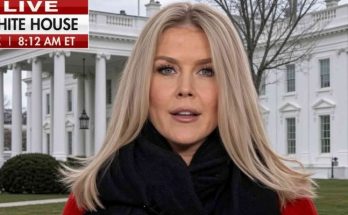
In the hyper-accelerated landscape of modern political discourse, the line between a diplomatic stance and a personal aesthetic
often becomes blurred, sometimes over something as seemingly mundane as the choice of a handbag. White House Press
Secretary Karoline Leavitt recently found herself at the center of this digital maelstrom, demonstrating how even the most
casual social media post can be dissected for ideological consistency. At just 27 years old, Leavitt holds the
distinction of being the youngest press secretary in United States history, a role that inherently carries a relentless
degree of public scrutiny. However, a recent weekend post on Instagram shifted the focus from her podium pronouncements
to a specific accessory, igniting a debate that touched on nationalism, luxury, and the peculiar nature of online
“call-out” culture.
The controversy was rooted in a prior diplomatic friction between Leavitt and French political figures. Tensions flared when
a French politician provocatively suggested that the Statue of Liberty—a gift from France to the United States in
the 19th century—should be returned. Leavitt, known for her sharp and uncompromising communication style, delivered a blistering rebuttal
that reverberated across the Atlantic. She reminded the French official of the historical weight of U.S. intervention during
the 20th century, pointedly stating that without American support, the citizens of France might currently be “speaking German.”
While the comment was hailed by her supporters as a robust defense of American exceptionalism and historical reality,
it set a contentious tone for her relationship with French cultural exports.
The online community, which rarely misses a perceived irony, was quick to pounce when Leavitt shared a seemingly
innocuous photo over the weekend. In the image, she was seen carrying a Louis Vuitton Neverfull tote—a staple
of high-end fashion produced by one of the most storied luxury houses in France. For her critics, the
presence of the bag was a glaring contradiction. They argued that it was hypocritical to invoke such harsh,
nationalist rhetoric against a nation while simultaneously indulging in its most prominent luxury exports. Social media threads soon
became a battlefield of perspectives, with commenters questioning why a high-level official who had just publicly chastised France
would choose to showcase a quintessential French status symbol.
However, the backlash was met with an equally fervent wave of support. Defenders of the press secretary dismissed
the criticism as a classic example of “gotcha” politics, arguing that a professional woman’s choice of attire or
accessories has no bearing on her ability to represent the administration’s foreign policy interests. Supporters flooded her comments
section with praise for her poise, her professionalism, and her refusal to be intimidated by what they characterized
as petty observations. To many in her camp, the outrage over a handbag was a desperate attempt to
distract from the substance of her defense of American sovereignty. They saw the Neverfull tote not as a
political statement, but as a practical, high-quality accessory suitable for a woman managing the grueling schedule of a
White House official.
This incident highlights a broader phenomenon in 21st-century politics: the commodification of the personal. Every item an official
wears, consumes, or displays is now subject to “brand alignment” checks by an audience that is perpetually online.
For Leavitt, the youngest person to ever inhabit her role, this scrutiny is amplified. She represents a generation
that grew up with social media, where the boundary between the private individual and the public servant is
almost non-existent. In this environment, a designer bag is never just a bag; it is a potential focal
point for a debate on trade, patriotism, and the perceived elitism of the political class.
What was perhaps most notable was Leavitt’s response—or lack thereof—to the burgeoning controversy. Rather than descending into the
digital trenches to litigate the merits of French leather goods versus American rhetoric, she appeared to intentionally pivot
toward the domestic. Her social media feed over the same weekend featured a starkly different narrative: one of
quiet, familial stability. She shared glimpses of a life far removed from the West Wing briefing room, including
photos of a baking session with her young son and quality time spent with her extended family. By
focusing on these wholesome, relatable moments, Leavitt seemed to be signaling that her identity is anchored in more
than just her job or her critics’ opinions.
This strategy of “lifestyle insulation” is becoming a common tool for high-profile figures. By humanizing herself through motherhood
and family tradition, Leavitt effectively lowered the temperature of the political discourse around her. It served as a
reminder that behind the sharp-edged retorts at the podium is a young mother navigating the complexities of a
career and a household. While the internet debated the ethics of Louis Vuitton, Leavitt was busy documenting the
simple joy of a weekend at home, leaving the handbag controversy to fade into the noise of the
next news cycle.
However, the incident leaves behind lingering questions about the expectations placed on modern public servants. Is it possible
to separate the appreciation of a culture’s art or fashion from a disagreement with its government’s policies? In
a globalized economy, the idea of a purely “patriotic” wardrobe is increasingly difficult to maintain. Most high-end products
are the result of complex, international supply chains, making the charge of hypocrisy a difficult one to avoid
for almost anyone in the public eye.
As Karoline Leavitt continues her tenure as the voice of the White House, she will undoubtedly face more
significant challenges than the brand of her tote bag. Yet, this minor flare-up serves as a potent case
study in the current political climate. It demonstrates that for the youngest press secretary in history, the briefing
never truly ends. Whether she is standing behind a lectern or walking down a street with a designer
bag, she is constantly being read, interpreted, and critiqued. Her ability to remain focused on her role while
shielding her personal life from the more toxic elements of online debate will likely be the hallmark of
her time in the administration. For now, she remains a figure of intense fascination—a young woman holding one
of the most powerful microphones in the world, learning in real-time that in politics, every detail, no matter
how small, is part of the story.