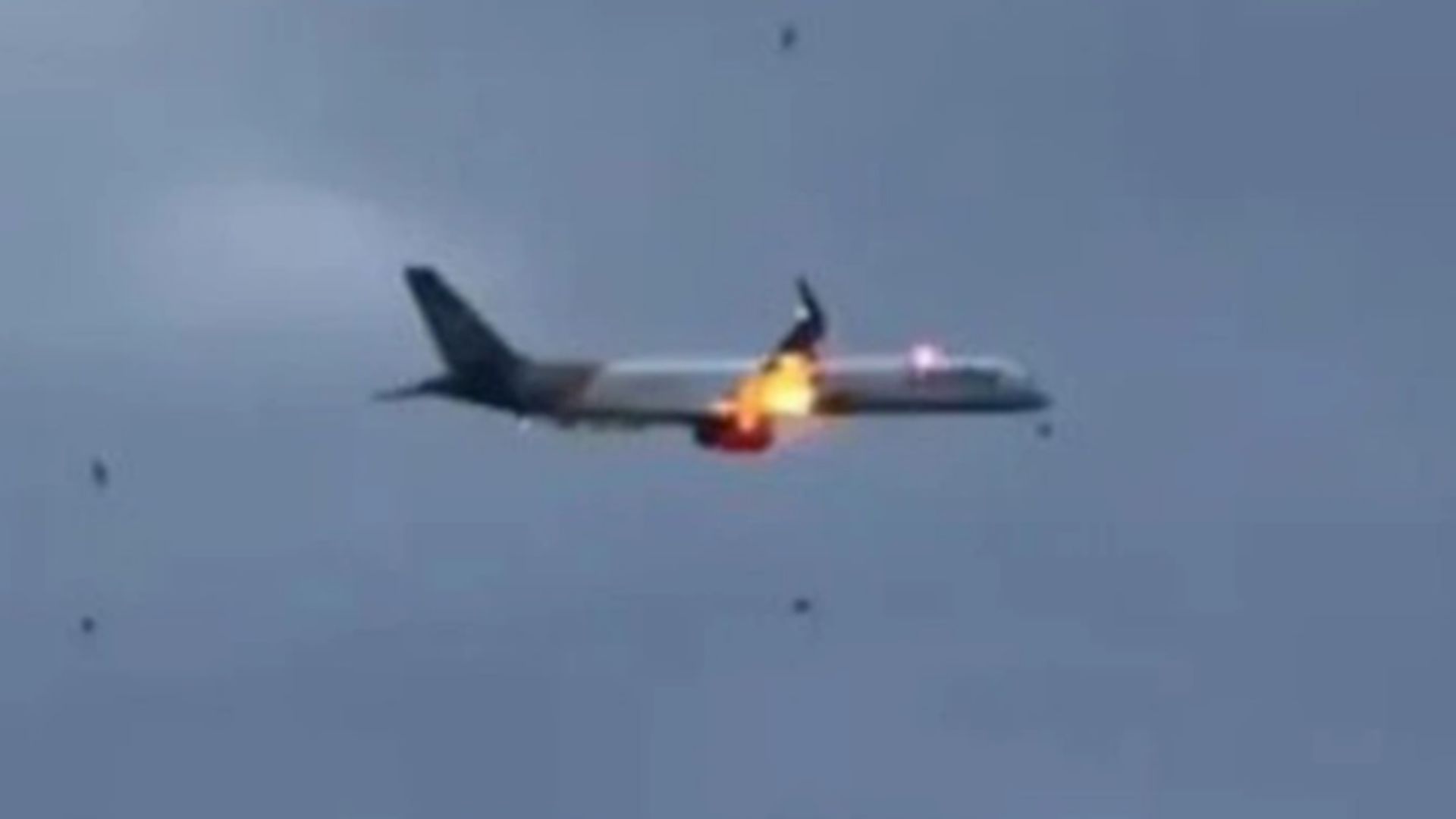
C-17 Military Aircraft’s Emergency Ocean Landing: A Shocking Tale of Survival

In a world where the skies are considered a realm of freedom, a harrowing incident emerged from the depths of a flight simulation that left many questioning the limits of human ingenuity.
The incident involved the C-17 military aircraft, a titan of the skies, known for its versatility and strength.
However, this story is not just about an aircraft; it’s about the sheer will to survive against all odds.
On a seemingly ordinary day, the C-17 was engaged in a routine flight simulation, an exercise designed to test the boundaries of pilot skills and aircraft capabilities.
As the simulation progressed, the unthinkable happened.
Suddenly, the engines of the C-17 erupted in flames, sending shockwaves through the cockpit.
The pilot, faced with a catastrophic failure, had to make a split-second decision that would determine the fate of the mission—and his life.
With flames licking at the wings of the aircraft, the pilot’s heart raced.
The cockpit was filled with alarms, each one a reminder of the impending doom.
The simulation, intended to replicate real-life scenarios, had turned into a nightmare.
In that moment, the pilot became more than just a character in a simulation; he embodied the spirit of resilience and courage that defines aviators around the world.
As the aircraft plunged toward the ocean, the pilot’s mind raced through a myriad of possibilities.
Would he be able to land the C-17 safely? Could he harness the skills he had honed over countless hours of training? The ocean loomed below, vast and unforgiving.
Yet, amid the chaos, a flicker of hope ignited within him.
The pilot knew he had to act decisively.
With the ocean drawing closer, the pilot skillfully maneuvered the C-17, aligning it with the turbulent waters below.
Each second felt like an eternity as he fought against the odds.
The roar of the engines was replaced by the sound of crashing waves.
The moment of impact was imminent.
Would this be the end of his journey, or the beginning of a new chapter in the saga of aviation?
As the C-17 touched down on the ocean’s surface, a cacophony of sound erupted.
The aircraft skidded across the water, foam and spray erupting in every direction.
Miraculously, the pilot managed to maintain control, guiding the aircraft to a halt.
It was a breathtaking feat of skill and determination.
The simulation had transformed into a dramatic rescue mission, and the pilot emerged as a hero in the eyes of many.
Witnesses from the simulation community were left in awe.
Many took to social media to express their disbelief at the unfolding drama.
Comments flooded in, praising the pilot’s quick thinking and bravery.
The incident sparked discussions about the importance of flight simulations in preparing pilots for real-world emergencies.
Could this simulation have saved lives? The answer was a resounding yes.
As the news spread, the story of the C-17 and its pilot became a viral sensation.
Videos and articles detailing the incident circulated on various platforms, captivating audiences worldwide.
The narrative transcended the realm of aviation, touching on themes of survival, courage, and the human spirit’s indomitable will.
People began to share their own stories of overcoming adversity, inspired by the pilot’s extraordinary feat.
In the aftermath of the incident, aviation experts weighed in on the implications of such simulations.
They emphasized the need for continuous training and development in emergency procedures.
The C-17’s emergency landing became a case study, showcasing the importance of preparedness in the face of unforeseen circumstances.
It was a wake-up call for many in the aviation industry.
As the dust settled, the pilot reflected on the experience.
What had begun as a routine simulation had turned into a life-altering event.
He had faced his fears head-on and emerged victorious.
The incident served as a reminder that even in the most controlled environments, unpredictability lurks around every corner.
The C-17 incident was not merely a tale of survival; it was a testament to the strength of the human spirit.
It reminded us that heroes are not born; they are made in moments of crisis.
As the pilot continued his journey, he carried with him the weight of that day—a day when he defied the odds and triumphed over adversity.
In conclusion, the story of the C-17 military aircraft’s emergency landing on the ocean is one that will be remembered for years to come.
It serves as a powerful reminder of the challenges faced by those who dare to take to the skies.
As we reflect on this incredible tale, we are left with one question: What would we do in the face of such overwhelming odds? The answer lies within us all, waiting to be discovered in our own moments of crisis.