Republicans nationwide are still using the courts to shore up voter integrity, though they have not always been successful.
Such is the case in Nebraska, where the state Supreme Court late
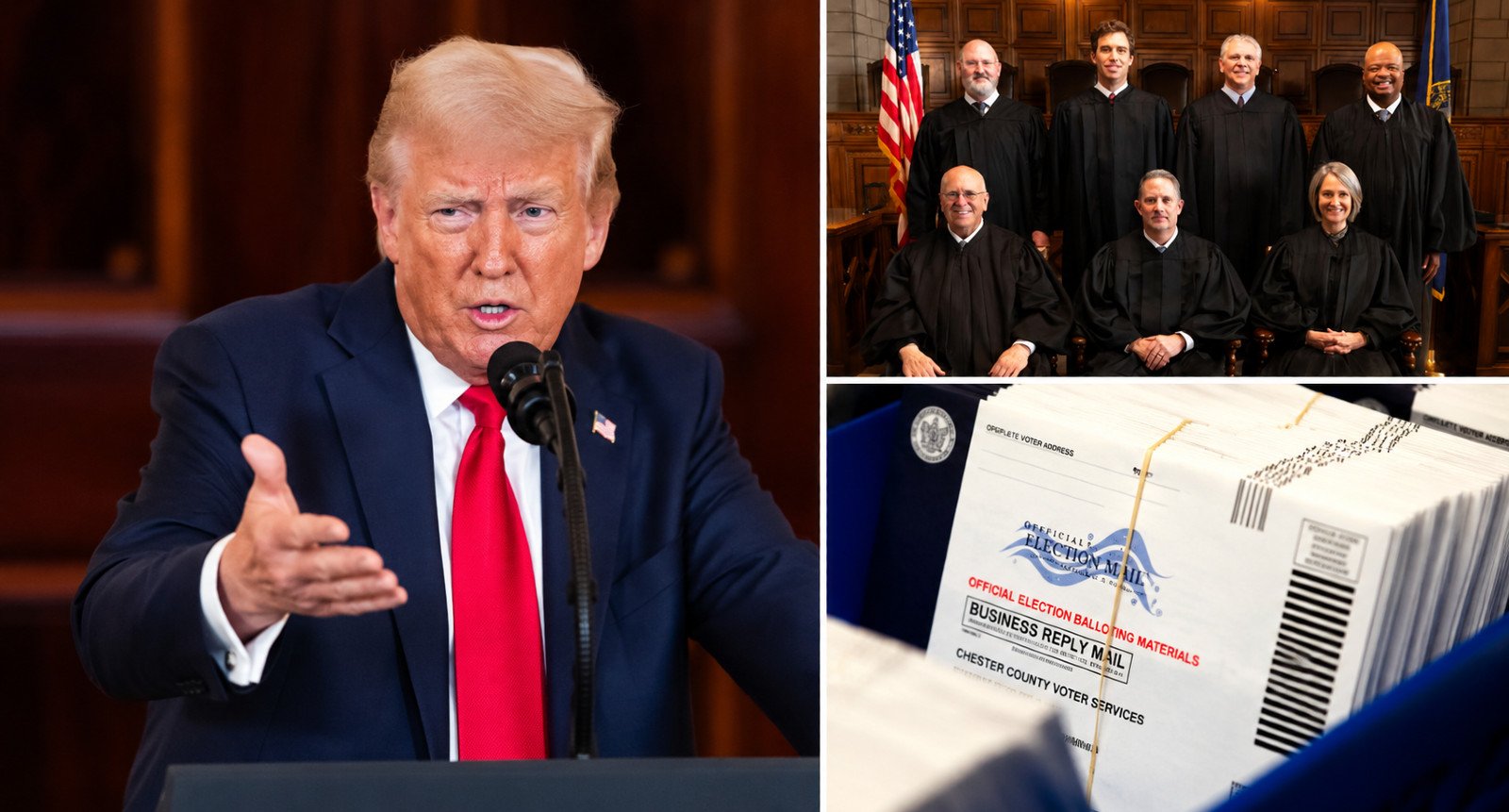
last week rejected a Republican-led challenge to a state law allowing certain American citizens who have never lived in Nebraska to vote there, ending the legal fight less than three weeks before the November 3 midterm elections.
In an unsigned 6-1 decision issued Friday, the court ruled that the Republican National Committee and two Lancaster County voters failed to demonstrate that the 2005 statute was unconstitutional in every circumstance.
The challenged law allows a U.S. citizen living abroad who has never resided in the United States to register in a Nebraska county if the person has a parent registered to vote there and meets the statute’s other requirements.
The statute also bars eligible overseas voters from registering in another state, and Nebraska law makes registering or voting in multiple states or counties a felony.
The RNC, Lancaster County voter Jack Riggins and Lancaster County Engineer Pam Dingman argued that the law violated Article VI, Section 1 of Nebraska’s Constitution, which imposes residency requirements on qualified voters.
Their lawsuit argued that permitting people who had never physically lived in Nebraska to participate in its elections diluted the votes of lawful Republican voters and conflicted with the state Constitution’s residency language.
Nebraska Secretary of State Bob Evnen, a Republican, defended the law alongside Republican Attorney General Mike Hilgers, arguing that Nebraska precedent treats residence for voting purposes as a question of legal domicile rather than simply physical presence.
That distinction ultimately proved central to the Supreme Court’s decision.
The state offered the example of an American citizen born in South America to missionaries from Saunders County who intended to return to Nebraska, arguing that the child could acquire the parents’ Nebraska domicile despite never physically living in the state.
Nebraska’s high court agreed that its longstanding precedent recognizes that children acquire their parents’ domicile at birth and can retain that domicile until establishing a new one.
Because the state demonstrated at least one circumstance in which the law
could constitutionally apply, the RNC could not satisfy the demanding standard required to invalidate the statute on its face.
The court’s reasoning relied partly on an 1895 Nebraska Supreme Court decision interpreting “residence” and “domicile” as synonymous for purposes of the state Constitution.
The ruling leaves the 2005 law intact for the upcoming election and concludes a case that had moved rapidly through Nebraska courts because of the approaching midterms.
State figures show the law applies to a relatively small number of voters, with 116 overseas citizens registered under the provision as of July, including 30 registered in Lancaster County.
Only six of those 116 voters participated in Nebraska’s May 12 primary, including one voter in Lancaster County.
During the 2024 general election, 72 people registered under the disputed provision cast ballots out of 965,236 total voters statewide, representing approximately 0.007% of participating voters.
Justice William Cassel was the lone dissenter, although his disagreement centered on whether the challengers had standing rather than an argument that the overseas voting statute should be declared unconstitutional.
The majority concluded Dingman had standing because she is an elected official currently running for reelection, while finding that the RNC and Riggins lacked standing to bring their claims.
Cassel said he would have dismissed the entire case for lack of standing, pointing to the tiny number of ballots involved compared with Nebraska’s overall electorate.
“The purported harm resembles a droplet in a deluge,” Cassel wrote while explaining why he believed Dingman had not demonstrated the type of concrete injury required to sue.
The case did not challenge the voting rights of military personnel or Nebraska residents who later moved overseas, and the RNC had specifically said its lawsuit was directed at the separate provision covering citizens who had never lived in the state.