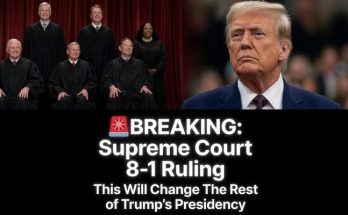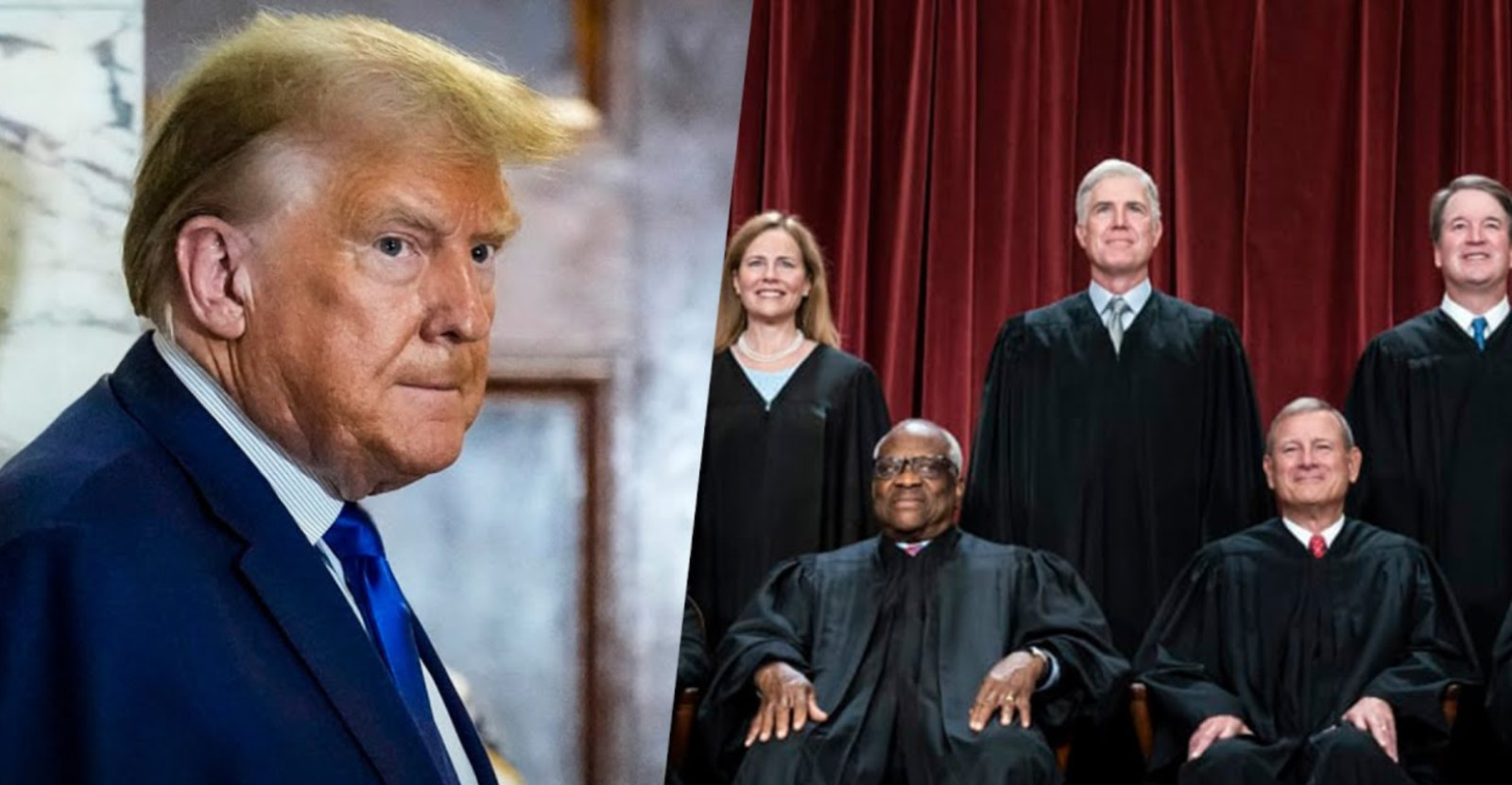
President Donald Trump said Monday that it was an “honor” to be serving as president when the Supreme Court issued a ruling that, he argued, strengthened “Presidential Power at a time when it is most needed.”
In two posts on Truth Social, Trump celebrated the high court’s decision in what he referred to as the “Slaughter Case,” saying the ruling reaffirmed the president’s constitutional authority under Article II to remove executive branch officials and agency appointees.
“BIG WIN at the Supreme Court,” Trump wrote.
“It is such an Honor to be the sitting President who won this Historic and Unprecedented Ruling, one of the most important ever given with respect to Presidential Powers,” he added.
In another post, Trump said his case overturned “90 years of precedent.”
The Supreme Court’s 6-3 decision in Trump v. Slaughter effectively overturned the 1935 precedent established in Humphrey’s Executor, which had restricted a president’s ability to remove leaders of certain independent federal agencies without cause.
Writing for the majority, Chief Justice John Roberts concluded that those statutory job protections violate the Constitution’s separation of powers by unduly limiting the president’s executive authority.
“If anything more is left of Humphrey’s, we overrule it,” Chief Justice John Roberts wrote for the majority in the ruling.
The case arose from Trump’s dismissal of former Federal Trade Commission Commissioner Rebecca Slaughter, despite a federal law requiring cause for her removal.
The court held that presidents generally have the authority to remove leaders of independent agencies at will, extending that principle to agencies such as the National Labor Relations Board, the Consumer Product Safety Commission, and the Merit Systems Protection Board.
The ruling represents another major legal victory for Trump’s efforts to expand presidential control over the executive branch during his second term.
The justices, however, carved out an important exception for the Federal Reserve, leaving its longstanding independence intact.
In a separate 5-4 ruling, the Supreme Court allowed Federal Reserve Gov. Lisa Cook to remain in office while she challenges Trump’s attempt to remove her over allegations of mortgage fraud, which Cook has denied.
Chief Justice John Roberts wrote that immediately removing Cook would effectively nullify the Federal Reserve’s statutory protections.
However, he noted that Trump could seek her removal again if he follows the appropriate legal process.
Following the decision, Trump indicated that he intends to pursue that exact course of action.
“We will take appropriate action immediately to make sure that someone who has committed wrongdoing will not be making vital decisions concerning the Welfare of the United States of America!” Trump wrote June 29 on Truth Social.
Justice Sonia Sotomayor, writing for the court’s liberal justices in dissent, argued that the ruling in Trump v. Slaughter grants presidents unprecedented authority and warned it could erode the independence of federal agencies.
Supporters of the decision, however, contend that it restores the president’s constitutional authority to supervise and manage the executive branch, reversing decades of judicial precedent that they argue improperly limited presidential power.
The ruling is expected to have broad implications for independent agencies that oversee areas including labor relations, federal employment, workplace discrimination, consumer protection, aviation safety and financial regulation.
In an analysis of the ruling, commentator Ben Dyke called it a “bombshell,” adding, “This is historic.”
He also indicated that the majority of justices were correct in returning constitutional power to the president, who is the head of the Executive Branch and should not be impeded by the Legislative Branch from exercising his authorities.
Beyond the Federal Trade Commission, the ruling is expected to affect roughly two dozen multimember independent agencies across the federal government, giving presidents broader authority to replace commissioners and board members with appointees who align with their policy priorities.